Cabergoline in the UK: the basics
Cabergoline is a prescription-only medicine (POM) in the United Kingdom. It lowers the hormone prolactin and is the dopamine agonist most often chosen for hyperprolactinaemia and prolactin-secreting pituitary tumours.
Prolactin normally rises after birth so that a mother can feed her baby. If it stays high at other times, it can disturb periods, fertility and sex drive, and it can cause milk-like discharge in both women and men.
This page explains how cabergoline is prescribed and monitored in UK practice, what the usual weekly dosing looks like, which medicines interact with it, and how to check that a pharmacy is legitimate before ordering anything online.
For a plain-language account written for patients, a hospital patient guide to cabergoline describes how the tablets are taken and what side effects to expect.
Why doctors prescribe it
- High prolactin of any cause, once other explanations such as medicines or an underactive thyroid have been checked. Our overview of hyperprolactinaemia causes covers them.
- Prolactinoma, a benign tumour of the pituitary gland, where the tablets often lower prolactin and shrink the growth. See cabergoline for prolactinoma.
- Fertility problems caused by raised prolactin, discussed in fertility and prolactin.
- Suppressing breast milk after birth, miscarriage or stillbirth. Our page on lactation suppression explains the short course used.
- Symptoms in men, including low libido, when prolactin is the cause. Read cabergoline for men.
UK hospital guidance has moved away from starting new Parkinson's patients on cabergoline because of heart valve concerns, so prolactin disorders are now the main use.
How it works
Dopamine from the brain tells the pituitary to hold back prolactin. Cabergoline acts like dopamine at D2 receptors, so prolactin-producing cells release less.
It is long-acting, which is why most people take it only once or twice a week. Prolactin levels often fall quickly after treatment begins, and symptoms ease over the following weeks and months.
Strengths, brands and manufacturers
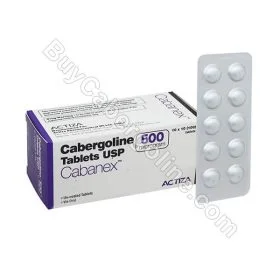
Tablets come in 0.5 mg strength, and larger-strength listings also exist. See our pages on 0.5 mg tablets and the 1 mg strength for details.
Dostinex is the original brand, and several generic makers supply the same active ingredient. Packaging and inactive ingredients differ between makers, so check the leaflet in your box and ask your pharmacist if a different supplier changes the look of your tablets.
Typical UK dosing
NHS prescribers follow the licensed schedule and adjust it to blood results. The figures below describe the usual pattern, not a personal prescription.
- Start: 0.5 mg a week, given as a single dose or as 0.25 mg on two separate days, for example Monday and Thursday.
- Step up: raised gradually, often by 0.5 mg each month, after repeat prolactin tests.
- Usual maintenance: around 1 mg a week, within a range of 0.25 mg to 2 mg a week.
- Higher doses: amounts above 1 mg a week are divided, and the ceiling used for prolactin disorders is 4.5 mg a week, with no more than 3 mg in a day.
- Food: doses are preferably taken with food, and some people find a bedtime dose eases dizziness and nausea.
Our dosage guide explains how clinicians choose the lowest dose that keeps prolactin normal.
Missed dose
If you remember soon after, take it. If the next dose is nearly due, skip the missed one and carry on. Never take extra tablets to catch up.
Overdose
Seek urgent help by calling 111 or 999, or attending A&E. Overdose may cause low blood pressure, fainting, a blocked nose and hallucinations.
How long treatment lasts
Length depends on the cause. Some people stop after prolactin has been normal for about two years, with blood tests afterwards. Others continue for longer. Read about stopping treatment before making any change, and always agree it with your specialist.
Interactions and combinations
- Antipsychotics and similar dopamine blockers, such as haloperidol, chlorpromazine and prochlorperazine, which can work against cabergoline.
- Metoclopramide, an anti-sickness medicine that blocks dopamine.
- Other ergot-derived drugs, where effects on blood vessels and valves can add up.
- Macrolide antibiotics such as erythromycin, which may increase cabergoline levels.
- Blood pressure medicines, which can add to light-headedness.
- Antidepressants and mental health medicines: tell your prescriber, because cabergoline can affect mood and behaviour in some people.
- Alcohol: it is not known to cause a specific reaction, but it can add to drowsiness, so be careful, particularly after a dose change.
Cabergoline tablets are swallowed with water as directed. The older advice not to take them with fruit juice or soft drinks is not part of the standard leaflet, and there is no need to dissolve the tablets.
Side effects
Many people have none, and others notice mild effects early on. More detail is in our guide to side effects.
Common
- Nausea, heartburn and constipation
- Dizziness and low blood pressure when standing
- Headache and tiredness
- Hot flushes and breast tenderness
Rare but important
- Breathlessness, a lasting cough or swollen legs, which may signal heart valve or lung changes
- Impulse-control problems such as compulsive gambling, spending, eating or sexual behaviour
- Sudden drowsiness or falling asleep without warning
- Low mood, anxiety, confusion or hallucinations
Report suspected side effects to your doctor or pharmacist. In the UK you can also report them yourself through the MHRA Yellow Card scheme.
Who should not take it, and heart checks
Cabergoline is not suitable if you have uncontrolled high blood pressure, an allergy to ergot derivatives, or a history of fibrosis affecting the lungs, heart or abdomen. It is also unsuitable if you already have heart valve disease. Our page on who should avoid cabergoline goes into more detail.
Because ergot-type drugs can affect the heart valves, UK prescribers usually arrange an echocardiogram before longer courses and repeat checks during treatment. We explain the background in heart valve risk.
Take extra care if you have liver or kidney problems, Raynaud's syndrome, a past stomach ulcer, severe asthma or serious mental illness, and tell your doctor about any recent surgery.
Pregnancy and breastfeeding
Lowering prolactin can restore ovulation, so contraception and pregnancy plans should be discussed early. Cabergoline stops milk production, so it is not used when you want to breastfeed.
Driving and work
Do not drive or use machinery if you feel dizzy or drowsy. Sudden sleepiness can occur, and UK drivers are expected to stop driving if affected.
How to get cabergoline safely in the UK
- See your GP or an endocrinologist for a prolactin blood test and, if needed, a pituitary MRI.
- Get a valid prescription, which an NHS or private prescriber can issue after assessment.
- Use a registered pharmacy. UK online pharmacies must be registered with the General Pharmaceutical Council (GPhC) and show a registration number you can check on the GPhC register.
- Be wary of sellers that offer prescription medicines with no prescription, very low prices or no clear contact details.
- Keep your GP informed about everything you take, so interactions and heart checks are not missed.
NHS prescription charges apply in England, while Scotland, Wales and Northern Ireland have their own arrangements. Compare how ordering works on our cabergoline for sale page and the Australian listing, cabergoline in Australia.
Frequently asked questions
Can I buy cabergoline without a prescription in the UK?
No. It is a prescription-only medicine, and a prescriber should assess your prolactin and heart health first.
How quickly will I feel better?
Prolactin can fall within days, but periods, fertility and libido may take weeks to months to improve.
Is it taken daily?
No. It is usually once or twice a week.
Will I need an echocardiogram?
Often yes for longer-term treatment. Your specialist decides based on dose, duration and your history.
What if my tablets look different after a repeat prescription?
Generic makers change, and tablets can look different. Check the label with your pharmacist to confirm it is cabergoline at the same strength.
Does cabergoline cause vaginal dryness?
Raised prolactin itself can cause dryness, and treatment often improves it. If dryness is new or troublesome after starting, mention it to your doctor.
This page is for general information and is not medical advice. Cabergoline is a prescription medicine and must be used under the guidance of a qualified healthcare professional.
More from our site
Buy Cabergoline Australia | Cabergoline for Sale | Cabergoline For Men


Leave A Review