Cabergoline 1 mg refers to a higher-strength tablet of a prescription medicine used to lower prolactin. Prolactin is a hormone made by the pituitary gland, and when it stays too high it can cause missed periods, infertility, milk-like discharge, low sex drive and erectile problems.
The most widely labelled cabergoline tablet is 0.5 mg, and the 1 mg strength is offered in some markets as a convenience for people whose prescribed weekly dose is already 1 mg. Availability varies by country, so check what your pharmacy actually stocks.
This page explains who a 1 mg strength is for, how it fits with usual dosing, and the key points on interactions, side effects and precautions. For an independent drug summary, see MedlinePlus's cabergoline medicine information.
Is 1 mg the right strength?
Strength is not a quality or "power" rating. It simply decides how many tablets make up your prescribed dose. Cabergoline treatment normally starts low and rises gradually, so a 1 mg tablet is rarely where treatment begins.
| Strength | Typical role |
|---|
| 0.25 mg | Small starting or fine-tuning steps |
| 0.5 mg | The standard labelled tablet, used for starting and maintenance |
| 1 mg | Convenient where the established weekly dose is 1 mg, where marketed |
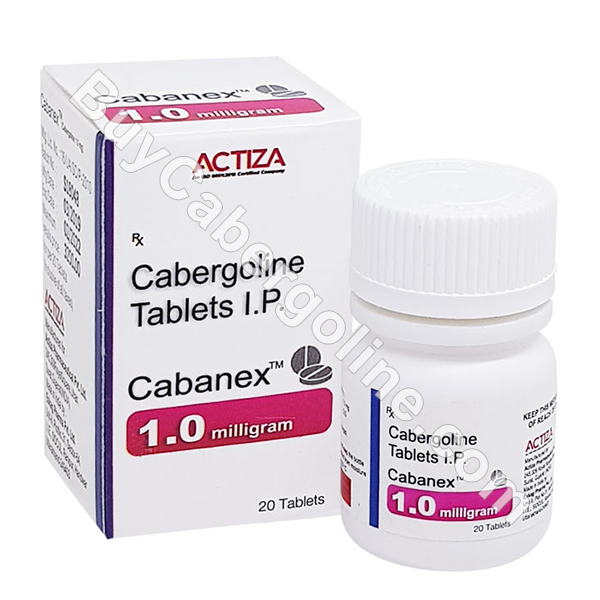
Compare with our pages on cabergoline 0.5 mg and the Cabanex 1 mg brand listing. Never split, double or swap strengths yourself, and ask your pharmacist how to translate your prescription into tablets.
What cabergoline is used for
- High prolactin (hyperprolactinaemia), the main use. See cabergoline and prolactin.
- Prolactin-secreting pituitary tumours, where it lowers hormone output and can shrink the tumour. See pituitary tumours.
- Fertility treatment when raised prolactin is preventing ovulation or lowering sperm production.
- Parkinson's disease, in some countries and mostly in the past, under specialist care.
Other claims, such as use for bodybuilding or weight loss, are off-label and not well supported.
How it works
Cabergoline is a dopamine agonist. It activates D2 receptors on prolactin-making cells in the pituitary, which mimics dopamine's natural braking effect, so less prolactin is released. It acts for days after a dose, which is why it is taken weekly or twice weekly, not daily. See cabergoline and dopamine.
Dosage and administration
Your prescriber sets the dose. These are typical label ranges, not personal advice.
- Starting dose: commonly 0.25 mg twice a week, or 0.5 mg once a week.
- Titration: raised in small steps, no sooner than every four weeks, according to prolactin results.
- Common maintenance: around 0.5 mg twice a week or 1 mg a week, with the labelled upper limit about 1 mg twice a week.
- Food: with or without food, and a snack can ease nausea.
- Under 18s: not generally recommended without specialist advice.
- Older adults and liver disease: the doctor may use lower doses or closer monitoring.
Monitoring
Prolactin is usually checked every few weeks while the dose is being adjusted, then less often once it is stable. A heart assessment, sometimes including an echocardiogram, may be arranged before or during longer treatment. See the full dosage guide.
Missed dose
Take it when you remember, unless the next dose is near. Do not take two doses together.
Overdose
Signs can include dizziness, fainting, nasal congestion and hallucinations. Seek medical advice or emergency care straight away.
Drug interactions
- Dopamine blockers, including haloperidol, chlorpromazine and metoclopramide, which counter cabergoline.
- Other ergot-derived drugs, such as bromocriptine, because of overlapping effects.
- Macrolide antibiotics, azole antifungals and some HIV medicines, which may raise cabergoline levels.
- Blood pressure medicines, which can add to dizziness and low blood pressure.
Tell your pharmacist about all prescription, over-the-counter and herbal products.
Side effects
Many people have mild, short-lived effects, particularly early on. See common side effects for more.
Common
- Nausea, vomiting, constipation or indigestion
- Dizziness, light-headedness and tiredness
- Headache
- Breast discomfort
Needs prompt medical attention
- Breathlessness, persistent cough or chest pain
- Swollen ankles or legs
- Fainting or very low blood pressure
- Hallucinations, confusion or marked mood change
- Compulsive gambling, shopping, eating or sexual urges
Precautions and warnings
- Heart valve disease and fibrosis: generally a reason to avoid cabergoline. Read about heart valve risk.
- Uncontrolled high blood pressure, and pregnancy-related hypertension where it is used to stop milk.
- Severe liver impairment: use with caution.
- Pregnancy: it can restore ovulation, so discuss contraception and planning with your doctor.
- Breastfeeding: it reduces milk, so it is normally avoided if you wish to continue.
- Driving: be careful until you know how it affects you.
See also who should avoid cabergoline.
Buying cabergoline 1 mg safely
Cabergoline is prescription-only in most countries. Buy from a registered pharmacy that asks for a prescription, and check the pack shows the strength, batch number, expiry and manufacturer. Be cautious of unusually low prices or sellers that offer it without a prescription. Our safe buying guide and generic cabergoline page give more detail.
Storage
Keep tablets in the original container, tightly closed, at room temperature, away from heat, damp and children.
Frequently asked questions
How long does cabergoline take to work?
Prolactin can begin falling within days. Symptoms such as irregular periods or low libido may take weeks to months to improve.
Is 1 mg stronger than 0.5 mg?
It contains twice the drug per tablet. What matters is the total weekly dose your doctor prescribes.
Can I stop suddenly?
Do not stop without medical advice, because prolactin and symptoms can return. See stopping cabergoline.
Is it safe long term?
It is used for years in many people, with regular monitoring. Heart checks are advised for long-term, higher-dose use. See long-term use.
Does it help with fertility?
Yes, when raised prolactin is the cause, because normalising prolactin can restore ovulation or sperm production. See cabergoline and infertility.
Does it raise testosterone in men?
Only indirectly, when high prolactin is suppressing it. See cabergoline for men.
Can I use it for bodybuilding?
That is off-label and carries risks, so it should be discussed with a doctor, not self-prescribed.
How often should prolactin be checked?
Typically every few weeks while adjusting the dose, then at intervals your doctor chooses.
This page is general information, not medical advice. Cabergoline is a prescription medicine and should be used only under the guidance of a qualified healthcare professional.


Leave A Review