Generic cabergoline: what the label means
Generic cabergoline contains the same active ingredient as the brand-name medicine, Dostinex, in the same strength and form. It is used to lower prolactin, and it is usually cheaper than the brand because the maker does not repeat the original clinical trials.
People often worry that "generic" means weaker or lower quality. In regulated markets that is not the case: a generic has to prove it delivers the same amount of drug to the body at about the same rate as the original.
This guide explains how generics are approved, what can differ from the brand, how to check you have a genuine product, and the essentials of dosing, interactions and safety that apply to every cabergoline tablet.
The regulator's own explanation of how generic drugs are approved is a useful plain-language starting point if you want to see the standards for yourself.
Brand versus generic at a glance
| Feature | Brand (Dostinex) | Generic cabergoline |
|---|
| Active ingredient | Cabergoline | Cabergoline |
| Strength and form | 0.5 mg tablet | Same strength and form |
| How it works | Dopamine D2 agonist | Identical |
| Approval evidence | Full clinical trials | Proof of bioequivalence to the brand |
| Inactive ingredients | Brand's own | May differ |
| Appearance | Brand's shape and markings | Often different |
| Price | Usually higher | Usually lower |
How generic medicines are approved
A regulator-approved generic must have the same active ingredient, strength, dosage form and route of administration as the brand. It must also show bioequivalence, meaning it delivers the same amount of active ingredient at the same rate and to the same extent.
The product label and instructions are generally the same as the brand's, and the factory has to meet the same quality standards. Those rules apply to approved products in markets such as the US, UK and Australia, so where a medicine comes from matters as much as the word "generic".
What can differ
- Look: colour, shape, scoring and printing are often different.
- Inactive ingredients: fillers and binders can vary, which rarely matters but could affect someone with a specific allergy or intolerance.
- Packaging: strips, bottles and leaflets differ between makers.
- Supply: the pharmacy may switch maker between refills.
If your tablets look different after a refill, ask the pharmacist to confirm the name, strength and maker before assuming a mistake. Our page on 0.5 mg tablets describes the usual strength, and the 1 mg listing covers the other.
How to check a product is genuine
- Use a prescription and a registered pharmacy, since cabergoline is prescription-only in most countries.
- Look for full labelling: product name, strength, batch number, expiry date and manufacturer details.
- Compare the leaflet with your prescriber's instructions.
- Be suspicious of pricing that is far below normal, packs with no batch details, or sellers with no clear contact information.
- Report problems such as tablets that look crumbled, smell odd or cause unexpected effects to your pharmacist or national regulator.
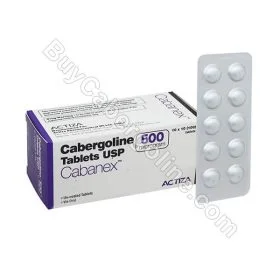
Brand and generic names differ by market. Related listings on this site include Cabanex 0.5mg, and country-specific guides for the UK and Australia.
What cabergoline treats
- High prolactin (hyperprolactinaemia): prolactin is the hormone that triggers milk production, and when it stays high it can cause missed periods, infertility, low sex drive, erectile problems, milk-like discharge and bone loss. See high prolactin levels.
- Prolactin-secreting pituitary tumours, where it often reduces tumour size.
- Stopping breast milk when there is a medical reason.
- Parkinson's disease, in some countries at much higher doses, though this use has declined.
How it works
Dopamine from the brain tells the pituitary gland to hold back prolactin. Cabergoline acts as a dopamine agonist, attaching to the same D2 receptors and switching them on. Prolactin output falls, usually within days.
It stays active in the body for a long time, which is why the usual schedule is once or twice a week and not every day. Read how often it is taken for more on timing.
Dosage
Your prescriber sets the dose, and the same schedule applies to brand and generic tablets. The figures below are typical label ranges, not a personal plan.
- Start: commonly 0.25 mg twice a week, or 0.5 mg once a week.
- Adjustment: raised in small steps, no more often than every four weeks, guided by prolactin blood tests.
- Maintenance: often around 1 mg a week, with the standard label range extending up to about 1 mg twice a week.
- Older adults: a lower dose or closer monitoring may be chosen if kidney or liver function is reduced.
- Children and teenagers: not studied for this use, so it should not be given to anyone under 18 unless a specialist directs it.
It can be taken with or without food, and food may ease nausea. Our guides to taking it with food and first-time use give practical tips, and the dosage guide explains titration in more depth.
Missed dose
Take it as soon as you remember. If the next dose is nearly due, skip the missed one. Do not take a double dose.
Overdose
Symptoms can include nasal congestion, fainting and hallucinations. Contact your doctor or local poison control service, and go to emergency care if symptoms are severe.
How long it takes to work
Prolactin typically starts falling within a few days, although symptoms such as irregular periods or low libido can take weeks to months to improve.
Interactions
- Antipsychotics such as haloperidol, thiothixene, chlorpromazine and prochlorperazine, which oppose cabergoline's action.
- Anti-nausea drugs such as metoclopramide and promethazine, for the same reason.
- Other ergot medicines, where combined effects on blood vessels and valves are a worry.
- Macrolide antibiotics and some antifungals, which may raise cabergoline levels.
- Blood pressure medicines, which can add to dizziness.
Tell your doctor and pharmacist about all prescription, over-the-counter and herbal products you take.
Side effects
Many people have few problems, and effects often settle after the first weeks. See also our guides to common side effects and managing nausea.
Common
- Nausea, vomiting, heartburn and constipation
- Tiredness, dizziness and light-headedness
- Headache and dry mouth
- Breast discomfort and painful periods
- Tingling, burning or numbness in the hands or feet
Serious, so seek medical help
- Shortness of breath, including when lying down, or a persistent cough
- Chest discomfort
- Swelling of the hands, feet, ankles or lower legs
- Passing much less urine, or back, side or groin pain
- Lumps or pain in the stomach area
- Urges to gamble, spend, eat or have sex that are hard to resist
Precautions and who should avoid it
Do not use cabergoline if you have uncontrolled high blood pressure, heart valve problems, a history of scarring (fibrosis) in the lungs, heart, kidneys or abdomen, or pregnancy-related high blood pressure when it is being used to stop milk production. A fuller list is in who should avoid cabergoline.
Take extra care with liver disease, because the drug may build up. Our notes on blood pressure and heart valve risk explain why prescribers often arrange a heart check before longer courses.
Storage
Keep tablets in their original container, tightly closed, at room temperature and away from heat, damp and children. Avoid bathrooms, where humidity is high.
Frequently asked questions
Is generic cabergoline as effective as Dostinex?
An approved generic must be bioequivalent to the brand, so it is expected to work the same way.
Can I buy it over the counter?
No. It is a prescription medicine in most countries, and a prolactin test and clinical assessment should come first.
Can I take it every day?
Not unless your doctor specifically says so. The usual schedule is once or twice a week.
Why does my generic look different from the last one?
Different makers use different shapes, colours and markings. Check the label with your pharmacist.
Is it safe?
It is well established when used under supervision, but it can cause side effects, and long-term use calls for heart checks. It is a medicine, not a supplement, and it should not be compared to over-the-counter products.
Are there alternatives?
Bromocriptine is another dopamine agonist, taken more often. Alternatives depend on your diagnosis, so ask your specialist. Metformin is a diabetes medicine and is not a substitute for cabergoline.
What is the cost difference?
Generics are usually cheaper than brands, though prices vary by country, pack size and supplier. Compare total cost, including shipping, on our cabergoline for sale page.
This page is for general information and is not medical advice. Cabergoline is a prescription medicine and should be used only under the guidance of a qualified healthcare professional.
Related pages
Cabergoline For Men | Cabergoline Reviews | Cabergoline 1mg


Leave A Review