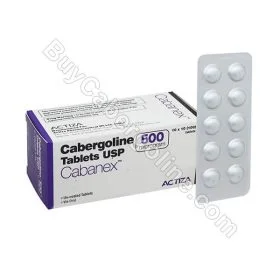
Caberlin 0.5 mg is a brand of cabergoline, a prescription tablet used to bring down high levels of the hormone prolactin. If your doctor has diagnosed high prolactin, this page walks through what treatment usually looks like from the first dose onwards.
It covers what to expect week by week, how the tablets are taken, side effects and interactions, and what to check before you buy. It is general information and does not replace your prescriber's instructions.
For a plain-language NHS patient leaflet on the same medicine, see this cabergoline treatment leaflet.
What Caberlin 0.5 mg is for
High prolactin (hyperprolactinaemia) can come from a small non-cancerous pituitary tumour, from some medicines, or from causes doctors cannot identify. Cabergoline is a common first-line treatment.
- Women: irregular or absent periods, milk-like discharge, trouble conceiving, and lower oestrogen with bone thinning over time.
- Men: low sex drive, erectile problems, low testosterone and reduced sperm production.
- Prolactinomas: cabergoline often shrinks these tumours. See cabergoline and pituitary tumours.
What to expect: a timeline
| When | What typically happens |
|---|
| First days | Prolactin starts to fall. Some people feel nausea, dizziness or tiredness. |
| Weeks 1 to 4 | Side effects usually ease. Your doctor repeats a prolactin test, and the dose may be adjusted after about four weeks. |
| Months 1 to 3 | Periods may return, milk-like discharge often reduces, and libido may improve. |
| Months 3 to 6 and beyond | Fertility and testosterone changes, and tumour shrinkage on scans, may appear. Your doctor reviews whether to continue, reduce or stop. |
Everyone responds differently, so treat these as typical patterns, not promises.
How Caberlin works
Cabergoline is a dopamine agonist. It activates the receptors that dopamine would normally switch on to hold prolactin back, so the pituitary releases less. It has a long-lasting effect, so it is taken once or twice a week.
Dosage and administration
Your prescriber sets the dose. These are typical label ranges.
- Not one tablet a day. The usual start is 0.25 mg twice a week or 0.5 mg once a week.
- Increases in steps no sooner than every four weeks, according to blood tests.
- Typical maintenance: about 0.5 to 1 mg a week, with the labelled upper limit around 1 mg twice a week.
- Swallow the tablet whole with water, with or without food. Check with your pharmacist before splitting any tablet.
- Same days each week, using a reminder.
Missed a dose? Take it when you remember unless the next is near, and never double up. If you take too much, contact your doctor or poison control and seek emergency help if you feel faint. Smaller strengths are also sold as Caberlin 0.25 mg. See our dosage guide and how often to take cabergoline.
Side effects
Common
- Nausea, vomiting, constipation or stomach upset
- Dizziness or vertigo
- Headache, tiredness and drowsiness
- Trouble sleeping in some people
Get medical help promptly
- Breathlessness, persistent cough or chest pain
- Swelling of the feet or legs
- Hallucinations, confusion or severe mood change
- Compulsive gambling, shopping, eating or sexual urges
- Fainting
Taking too much can cause dizziness, fainting and hallucinations, so seek advice. More on side effects and managing nausea.
Interactions
- Antipsychotics such as haloperidol, and anti-sickness drugs such as metoclopramide, which oppose its effect.
- Macrolide antibiotics such as erythromycin, which may raise levels.
- Other ergot medicines such as bromocriptine.
- Blood pressure medicines, which may add to dizziness.
- Alcohol, which can worsen drowsiness and dizziness.
Precautions
- Pregnancy: cabergoline can restore fertility, so discuss contraception and pregnancy plans with your doctor. Do not assume it is safe or unsafe without advice.
- Breastfeeding: it reduces milk and is normally avoided if you want to continue.
- Heart valve disease or fibrosis: a reason to avoid it. See heart valve risk.
- Uncontrolled high blood pressure and liver disease: need medical review first.
- Driving: take care until you know how it affects you.
See also who should avoid cabergoline.
Buying Caberlin 0.5 mg safely
Use a registered pharmacy and a prescription. Check the pack for strength, batch number, expiry date and manufacturer, and be cautious of sellers that offer it without a prescription or at unusually low prices. Our safe buying guide explains what to look for, and the reviews guide helps you read patient feedback critically.
Frequently asked questions
Is Caberlin safe while breastfeeding?
It lowers milk production, so it is normally avoided if you wish to breastfeed.
Is it safe in pregnancy?
Do not decide this yourself. Many people stop it once pregnancy is confirmed, but some with large tumours need ongoing treatment, so speak to your doctor straight away.
Can I chew or crush it?
Ask your pharmacist. Swallowing it whole with water is the usual advice.
How long do I need to take it?
It varies. Some people can stop after prolactin has been normal for a sustained period, but only your doctor can decide.
This page is general information, not medical advice. Cabergoline is a prescription medicine and should be used only under the guidance of a qualified healthcare professional.



Leave A Review